
Species
Chasing a Belize grand slam from Placencia
In early March, two anglers fishing with me out of Placencia, Belize, each landed a grand slam on the same day: permit, tarpon, and bonefish for both.
Permit, tarpon, and bonefish overlap in southern Belize from roughly April through September, the window I point most grand slam attempts toward. The right conditions beat the calendar.
Both tarpon came from the reef channel outside Tobacco Caye, right on the turn of the tide. The bonefish that closed the first slam ate a mini Crazy Charlie at South Water Caye.
The permit ate crab flies around Tobacco Caye: a green Bauer Crab on a leader lengthened to twelve feet for the flat calm, and a tan Flexo Crab dropped past a school of thirty or forty fish.
In case you don’t know, a grand slam in fly fishing is permit, tarpon, and bonefish, all three caught and released on the same day. Southern Belize and the flats around Placencia are one of the most realistic places in the world to do it. The fishery holds all three within range of each other, and if you fish the right tidal windows you’ll have a realistic chance of landing all three any single day.
I’ve guided over 100 grand slams out of Placencia.
Here is one that happened. Two of them, actually, in the same day.
I’ve guided grand slam attempts more times than I can count. More often than not, something gets in the way. The permit keep spooking, the tarpon comes off the hook or grinds down the tippet, the wind picks up and makes casting hard. André and Torbjørn booked two days with me in early March. By the time we got back to the dock on day two, both of them had all three.
Day two: flat calm and tailing fish
Day one had been slow. A western cold front had covered central and southern Belize for four or five days, and the fishing was tough. We had some good shots at permit on the flats, but none of them would eat. In the afternoon we went to the reef channel outside Tobacco Caye to look for migratory tarpon. Plenty rolling. Nothing eating.
Day two started differently.
We woke up at 5am and walked over to the dock at Tobacco. The water was dead calm. Completely slicked out and glassy. Days like this are usually really tough, as you’ll basically just end up spooking fish instead of catching fish all day. With the flat calm, everything is amplified. The sound of the push pole. A minor shadow from the boat, the rod, the line, a pelican flying over the flat. The fish are wired and will run in a split second.
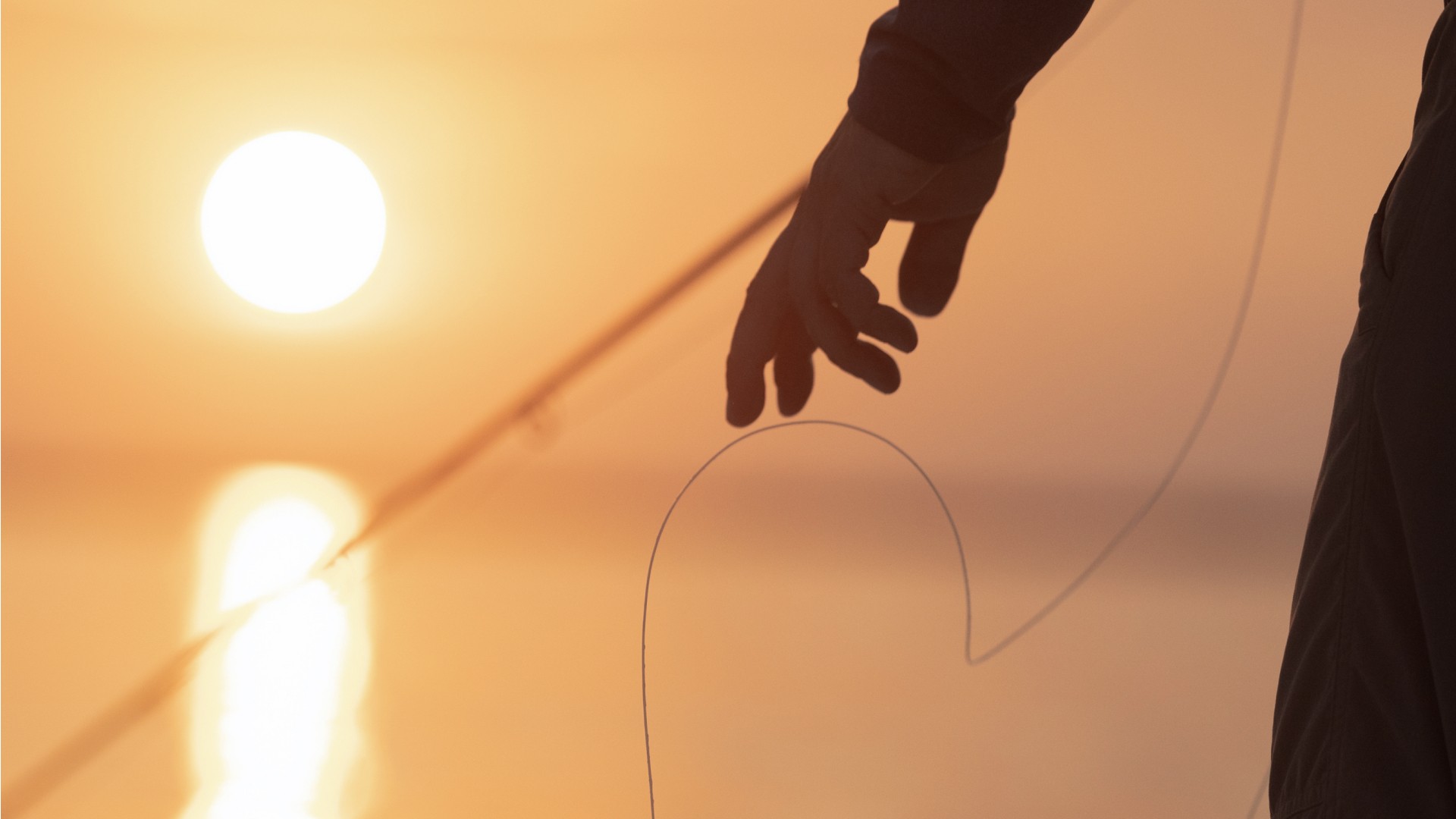
We got in the boat and set course for a long, shallow turtle grass flat northwest of Tobacco Caye. This flat usually has good water on an early rising tide. The sun was just popping over the horizon. I stood up as we pulled in to read the flat. Permit, 10 o’clock, 150 yards out, feeding toward the mangroves. André got on the deck with the 9-weight and a Green Bauer Crab. We had lengthened the leader from nine to twelve feet before we left the dock. The fish kept moving along the turtle grass edge, tailing steady. As we slowly crawled closer I kept checking he had the fish in sight, kept him updated on distance.
When we were within range I told him to start casting, rod tip low, false casts to a minimum. On mornings like this, the sun catches the rod and the line, and one flash is often a flash too many.
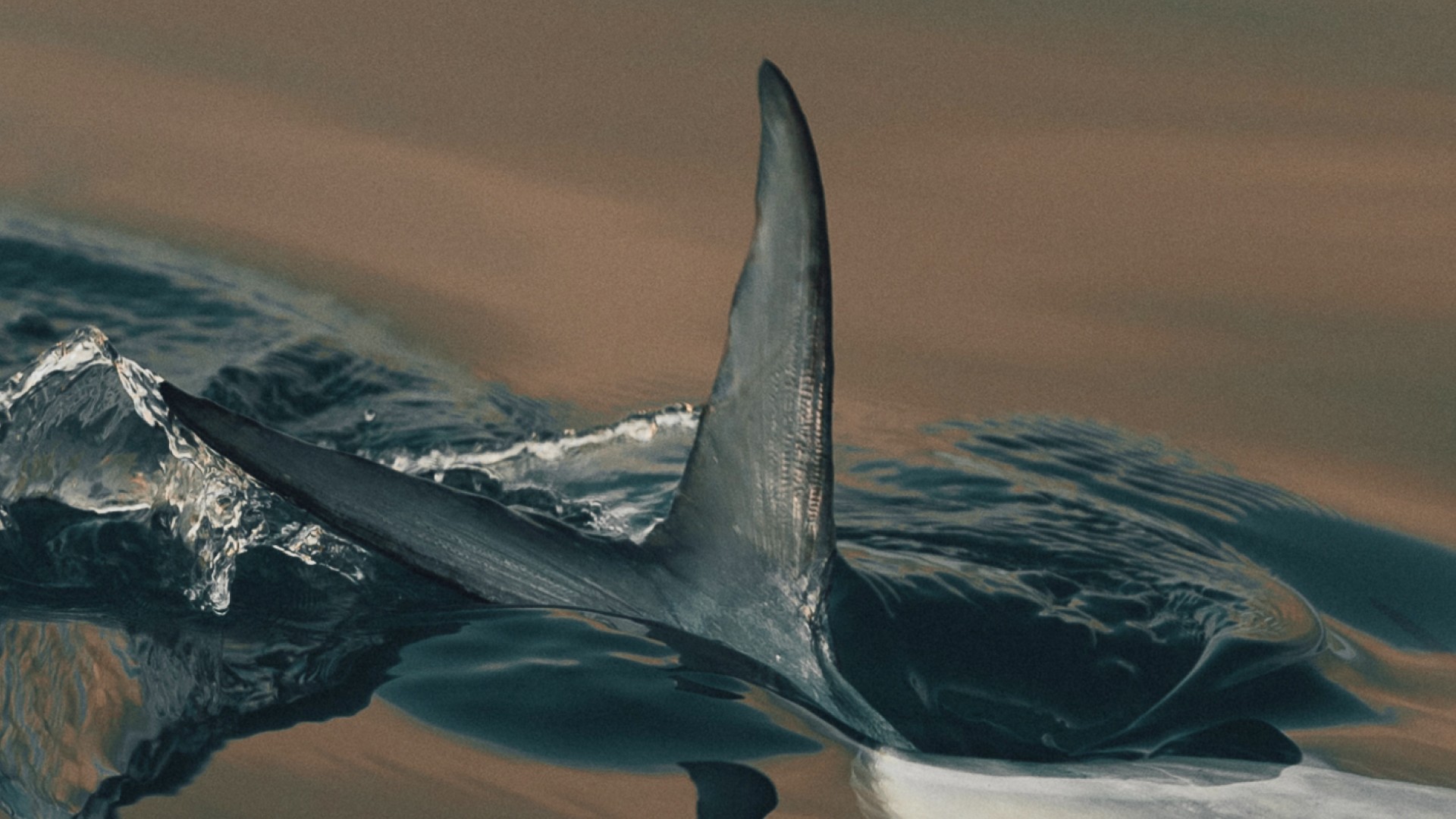
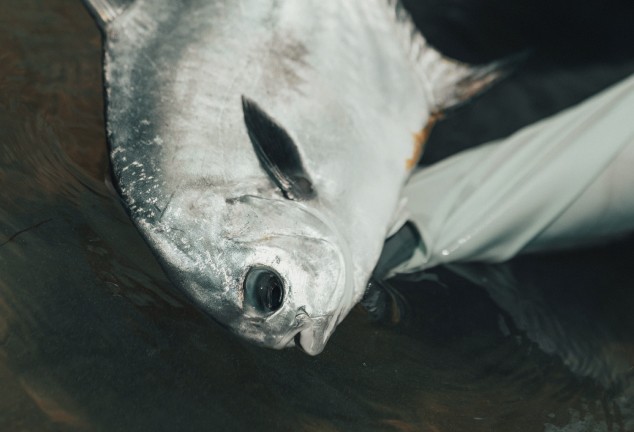
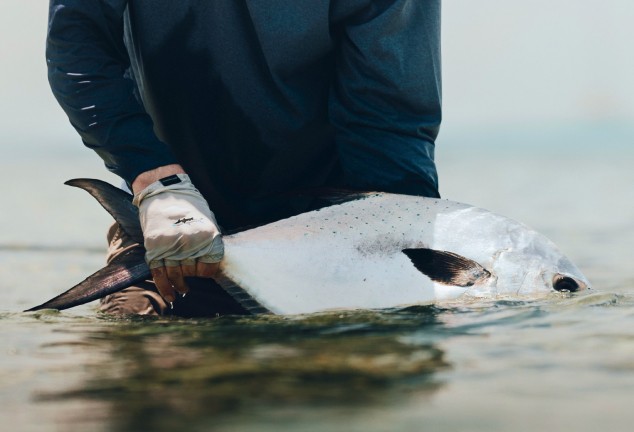
The fish was clearly moving and feeding in our direction. André landed the fly a bit short, but in perfect line of the directional pattern of the fish. The permit didn’t notice. It was feeding. It was happy. I told him to keep tension on the line and wait. When the fish was a foot or two out, I told him to twitch it once and stop. Just enough movement to get its attention. It came right over, tipped down, and sucked it in. Strip-set. The permit took off at full speed across the flat. Line cleared the boat deck in a split second and the reel started screaming. Fifteen minutes of tug of war later, the fish came broadside to the boat.
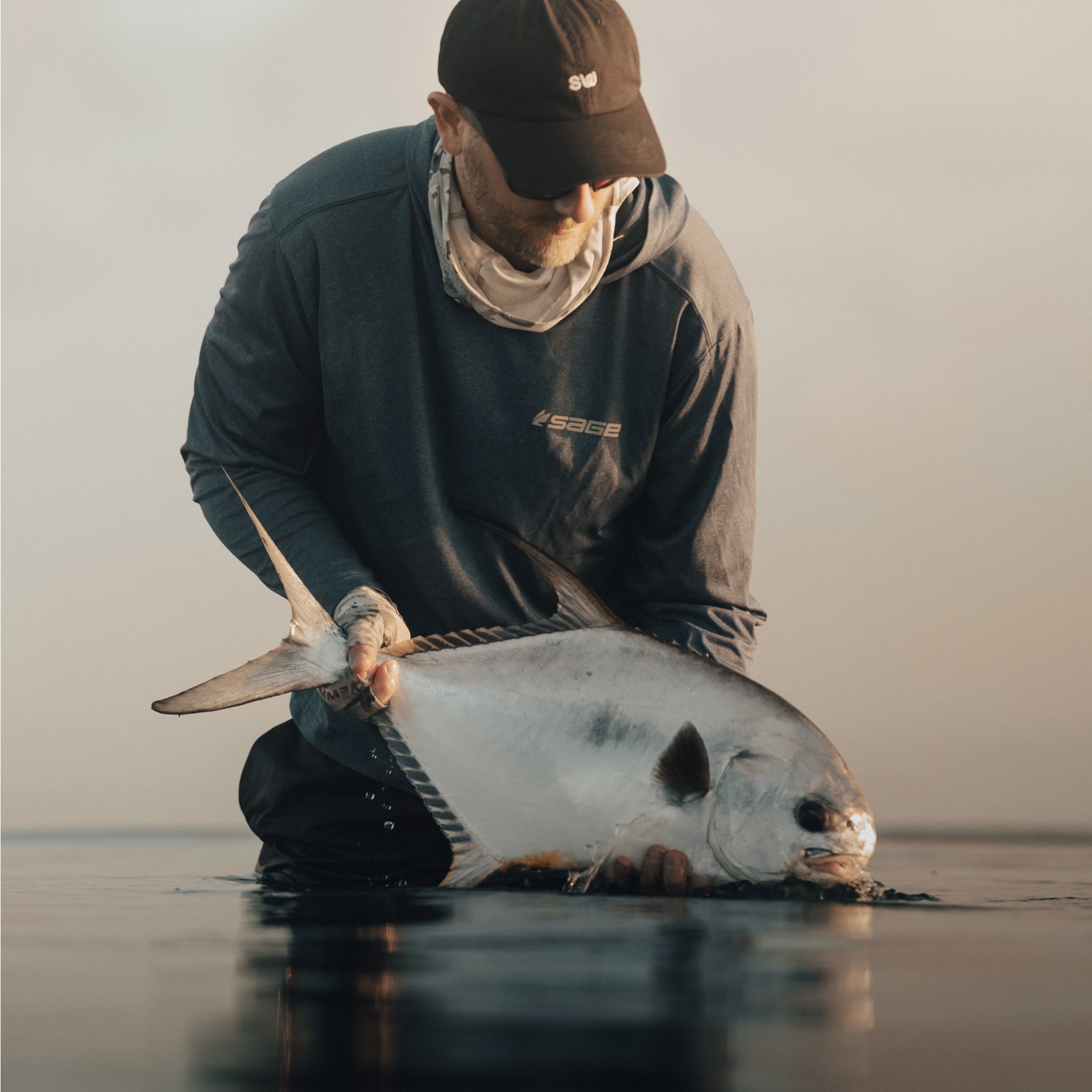
We worked some nearby flats after that. More shots at tailing permit. Some spooked in the slick, some just weren’t interested. We moved further south and stopped on a bonefish flat, found a school, and Torbjørn landed one quickly, but it spooked the rest of the school. We moved on to check a permit flat just outside Tarpon Caye but found some big rolling tarpon instead. Torbjørn hooked a few but lost them on the jumps.
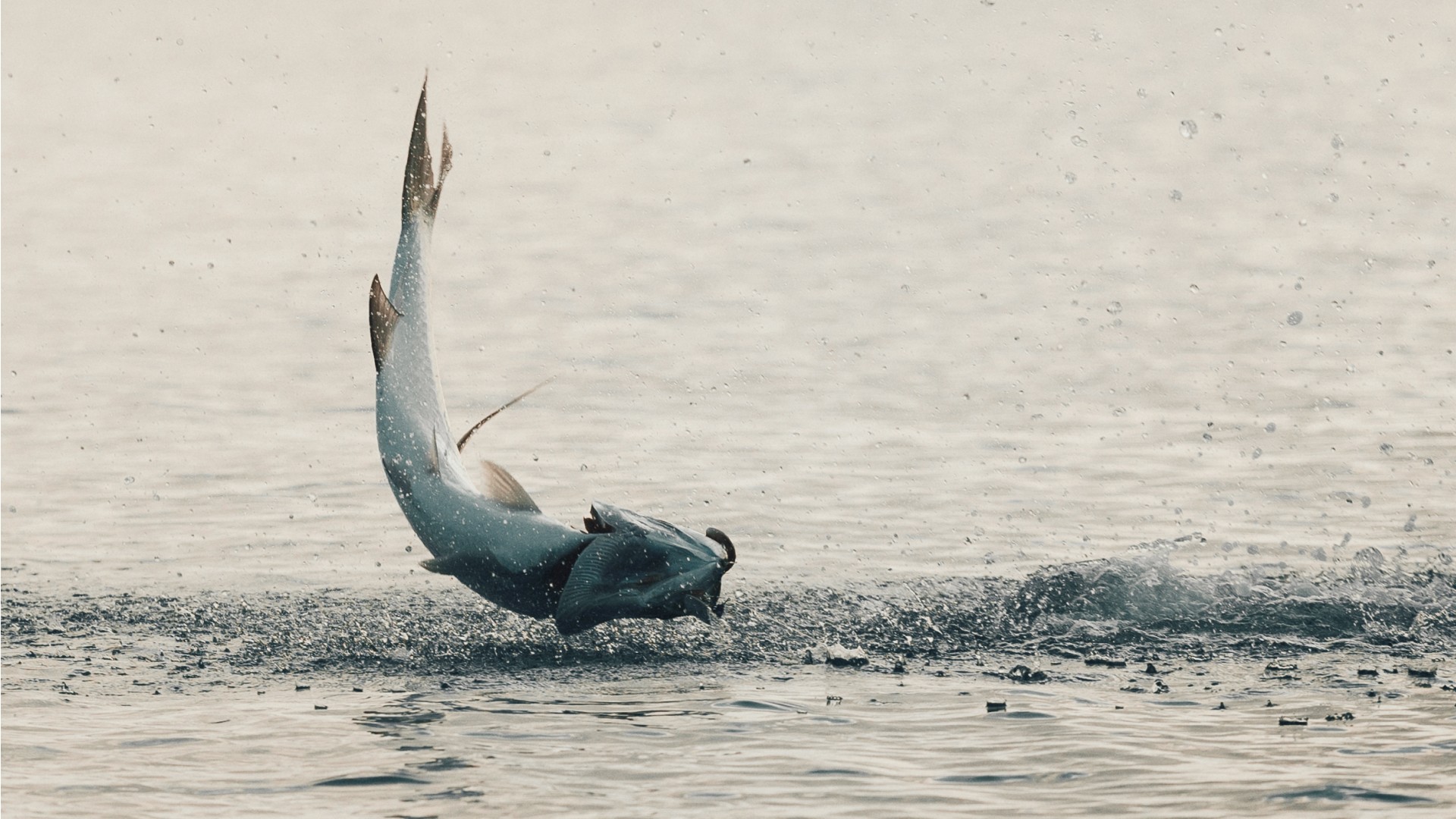
By late mid-day we were closing in on low slack tide. I suggested we go back to the channel outside Tobacco Caye, anchor up near the dropoff, and wait. Those tarpon from the day before would show up when the water started moving again.
We had lunch and waited. They showed up like clockwork. Right on the turn of the tide. Huge silver backs rolling in clusters of 10-15 fish.
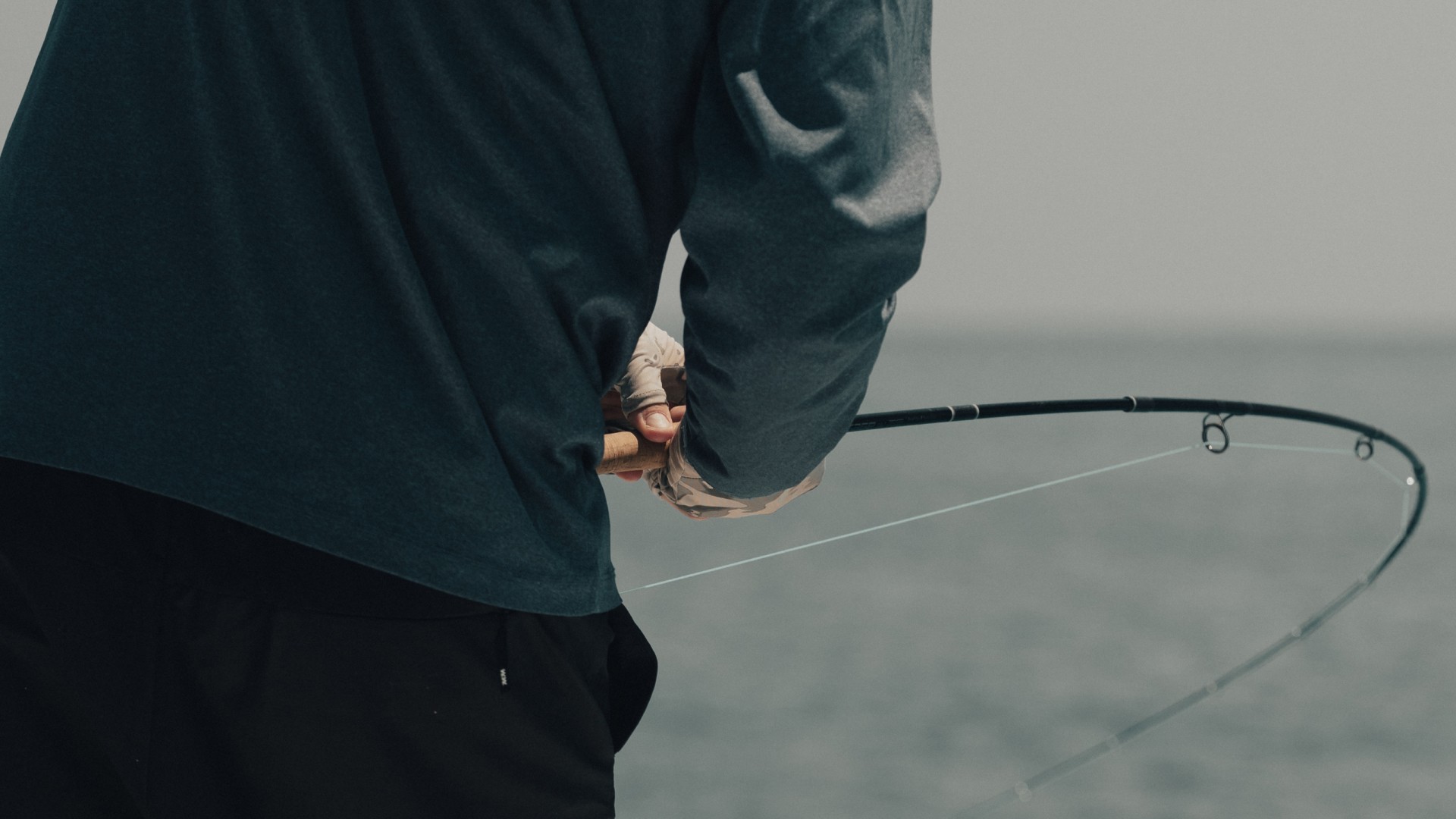
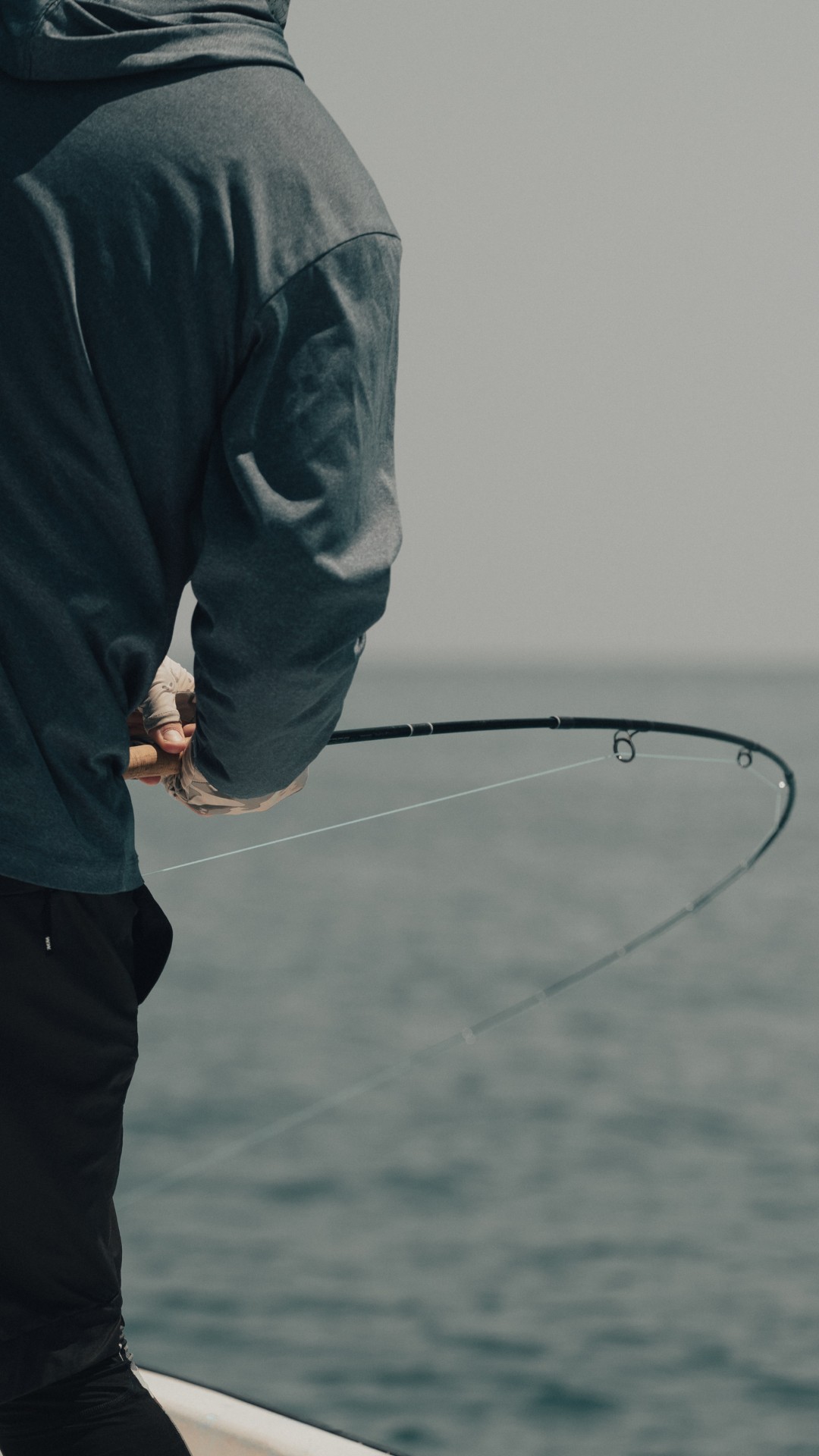
André hooked a big one. It exploded in the air, left and right, then went straight down into some coral. We were sure it was gone. The line went slack. It had wrapped itself and when it came loose the fish was still on. It jumped again, ran hard, and we ran after it. Thirty minutes later it was at the side of the boat. The line was shot from the coral. A miracle we managed to land it.
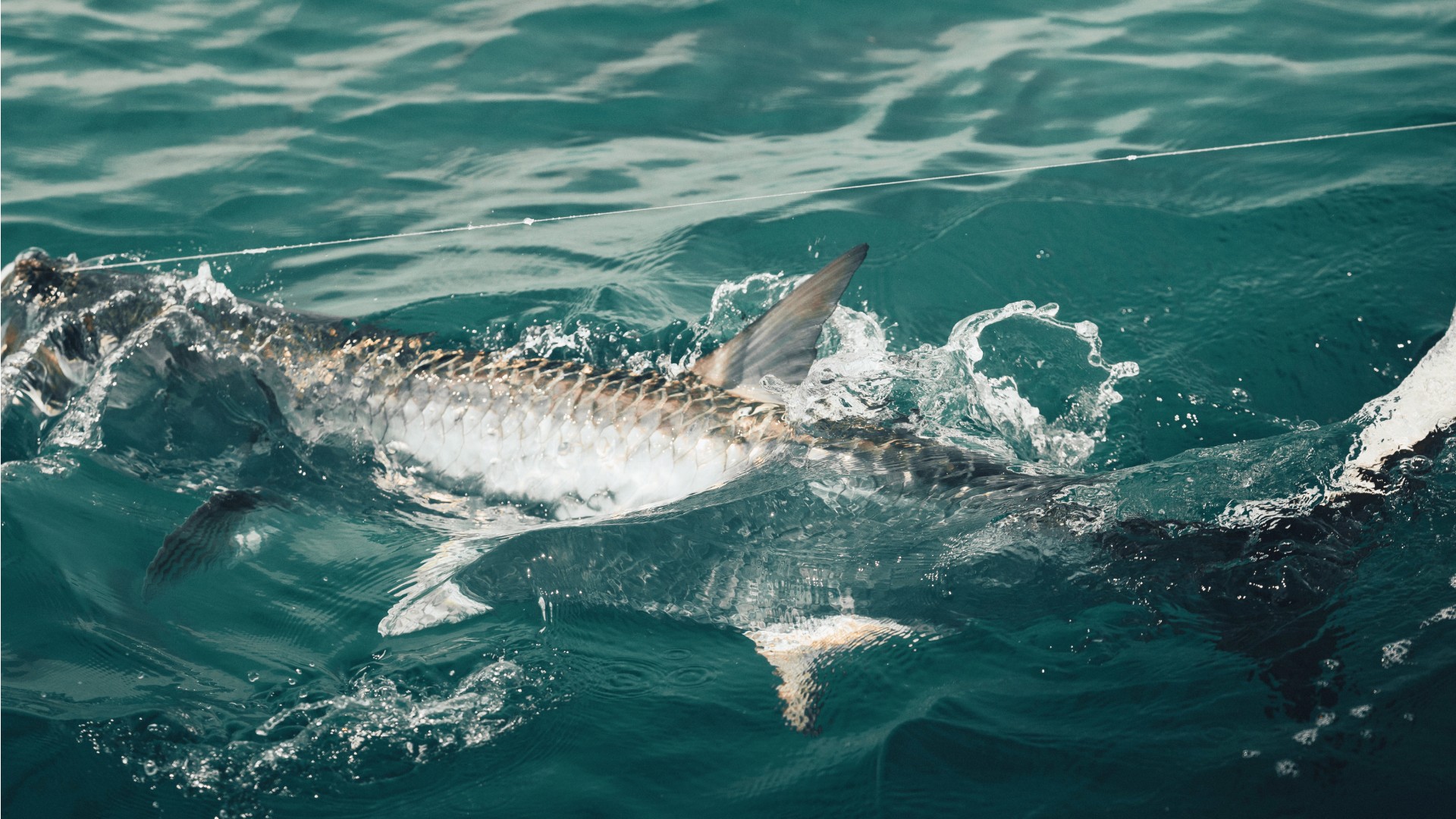
We tried a few more casts, but I had other plans for the rising tide. I started pulling the anchor to head for the permit flats. Then I saw a shadow moving in the deep blue water off the side of the skiff. Dark at first. Then it came up and I knew exactly what it was.
Massive school of permit. Thirty, maybe forty fish.
I yelled. Torbjørn grabbed the permit rod and started stripping out line. André reeled in the tarpon rig to clear things up. Torbjørn cast a tan Flexo Crab past the school, let it drop, gave it a few short strips as the school came through.
One fish peeled off and ate it. Fifteen minutes later, Torbjørn was in the water with his permit in hand.

André had permit and tarpon. Torbjørn had bonefish and permit. We needed bonefish for André’s slam and tarpon for Torbjørn’s.
We did a quick run south to South Water Caye. Large numbers of bonefish down there. André cast a mini Crazy Charlie near a school on the north side, got an eat, but the fish ran under a dock and broke him off. We found another school on the west side. Same approach. One ate, and he landed it.
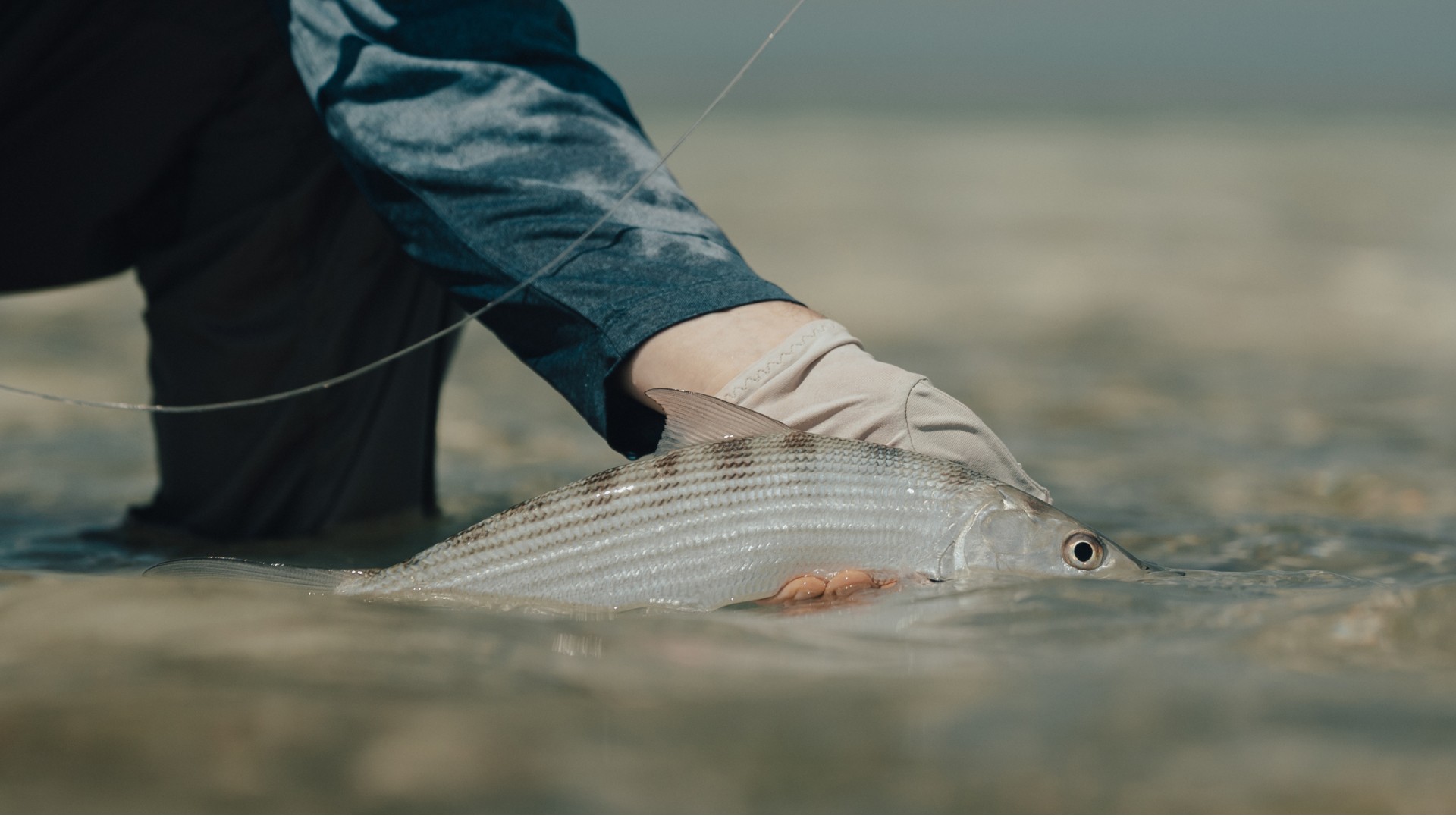
First grand slam of the day. Now it was all about Torbjørn’s tarpon.
We rushed back up to the channel and he started working it hard. They were there like before, big fish rolling in schools. We were in position, cast after cast into the middle of moving fish. If they relocated, we relocated with them. Nothing eating. We went through twenty different flies. Every pattern in the box. The channel usually turns on about an hour before sunset. We were an hour past that, deep into blue hour, and I was pretty sure the double slam had slipped.
Torbjørn said nothing. Just kept casting. Persistent.
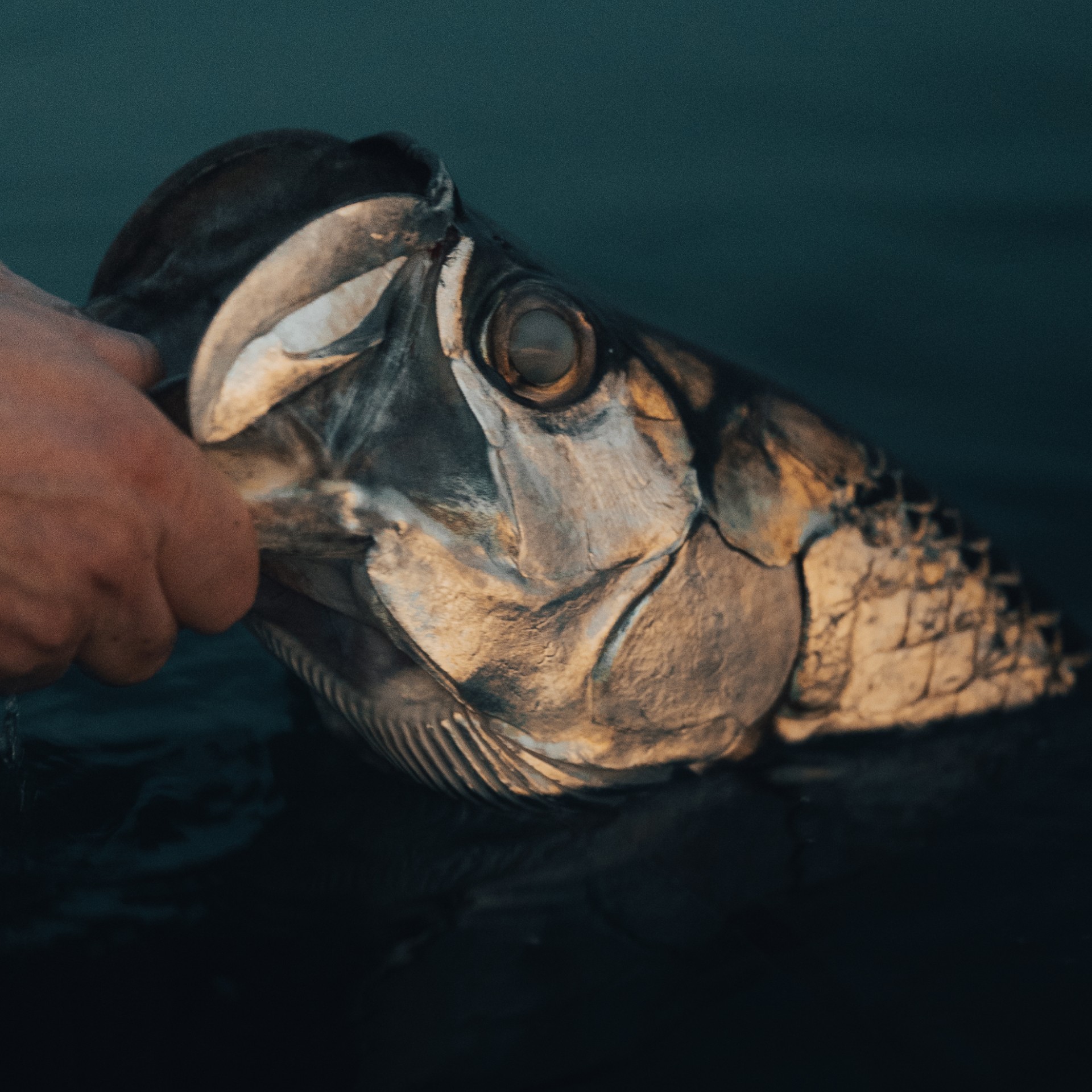
We made one more pass through the channel, tighter to Tobacco Caye, right along the dropoff. His fly landed in the dark water. Something ate. A juvenile tarpon jumped into the air. It was on. Not the biggest fish, but a tarpon. Torbjørn drove the hook home. This one was not slipping.
He didn’t say a word during the fight. Nobody did. When I got my hand on that fish in the dark, nobody said anything for a second. Then the high fives, the screams, the hugs.
Twelve hours on the water. Double grand slam.
The best months to try
Bonefish are available year-round. Permit fish best from spring into early summer, and the big migratory tarpon run from late spring into September. The overlap, roughly April through September, is the window I’d point most people toward. The month-by-month calendar breaks down what each part of the season looks like.
That said, the day above happened in March. The right conditions matter more than the calendar. A slick morning and a moving tide will beat a “perfect” month with bad weather every time.
How many days you need
One good day is enough. But book a few so the odds are in your favour. A cold front, a bad tide, or one fish coming off the hook can end a slam attempt fast. The day above only came together because they had a second day after a slow first one. A couple of days gives you room to have a slow one and still come back. The way the permit eats, on the strip-set, is the part you can’t rush.
Interested in coming down to try for one? Get in touch and we’ll give it our best!

I run half day, full day and multi-day fly fishing trips from Placencia, Hopkins or nearby islands. Target species are mainly permit, tarpon, and bonefish.
What happens next?
I'll respond within 24 hours
We'll discuss your dates, preferences, and any questions
Payment is due at the end of your trip

Multiple shots guaranteed — 400+ permit landed —

