Species
How to catch tarpon in Placencia, Belize
First time a big tarpon jumps, you freeze. Six feet of fish in the air, fifteen feet from the boat. Everything you practiced goes out the window. That's tarpon. Doesn't matter how ready you think you are.
Why southern Belize
Ambergris Caye and Turneffe get a lot of attention. Good fishing up there. But down here in the south we've got Victoria Channel running right along the reef, Tarpon Caye sitting in the middle of it, and fish that haven't been pressured half as much. When a tarpon down here decides to eat, it eats. That's the difference.
When to fish for tarpon in Placencia
The migration
Fish start showing up in March and build through spring. The big push is June, July, August. That's when you get the 80 to 150-pound fish moving through the channel in numbers. When the bait stacks up, you'll have shots all day.
Worth knowing: the migration hits Ambergris Caye and Turneffe first. We see them down here days to a few weeks later, working their way south along the reef. By mid-September the migratory fish are mostly gone. Channel still holds some, just fewer. November they're offshore.
Resident tarpon year-round
There are fish here year-round though. The lagoon, the mangrove creeks around Hopkins, the Sittee River. Resident tarpon, 10 to 40 pounds, that don't really go anywhere. Good fishing on days when weather or tides don't play along out on the channel.
Tarpon fishing month by month
January and February:
Resident fish are around but hard to pin down. Cold fronts push everything deep. New and full moon tides give you the best shot.
March and April:
Migration starts and the weather usually gets its act together. April full moons pull in bigger fish.
May:
One of my favourite months. Dry season, calm, hot. Good tarpon fishing and permit are everywhere.
June, July, and August:
Best of the year. Tarpon, permit, and bonefish all up at once. Grand Slams happen more this time of year than any other. Storms roll through but they don't last.
September and October:
Migratory fish thin out. Still worth fishing, just don't expect the numbers you had in summer.
November and December:
Permit and bonefish take over. Some tarpon still hanging around in November. Cold fronts start showing up toward December.
Where to find tarpon around Placencia
Victoria channel and Tarpon Caye
This is where you go for the big fish. Channel is 50 feet deep in places, runs along the reef, and tarpon use it to move. They follow the bait. When the sardines and minnows stack up along the edges, the tarpon are right there with them.
My father built Tarpon Caye Lodge out here. I grew up fishing this lagoon. The caye sits right in the middle of the channel, about 15 miles offshore, and the lagoon holds resident fish year-round. Migratory fish drop in to feed on the way through. Good reef cuts on either side that concentrate fish on a moving tide.
Read the structure, work the current, cover the drop-offs. A fish can come from anywhere.
Monkey river
Thirty minutes south of Placencia. Opens into a sheltered lagoon. Good rolling tarpon and snook here, especially after baitfish get pushed out of the river. Mostly juvenile fish but bigger ones move through during migration. When the sea won't cooperate, this is where we go.
Placencia lagoon
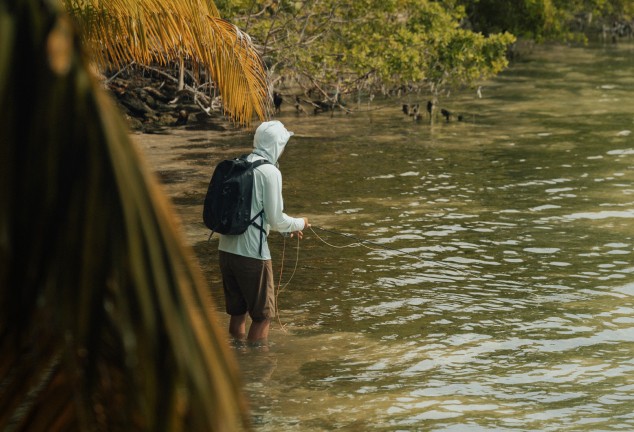
Right off the village. Four miles long, two miles wide. Juvenile tarpon and machaca along the mangrove edges. Not where you go for big fish, but it's reliable and it's right there when the channel is blown out. Fish it early morning or evening.
Sittee river near Hopkins
Brackish water, dark, full of structure. Blind-cast along mangrove edges and into bends. Watch for rolling fish, that's how you find them. Mostly under 30 pounds but you'll see fish to 40 or 50. After rain pushes baitfish downstream this river can fish really well.
How to fish tarpon in southern Belize
Channel fishing for big tarpon
Sink-tip or full-sink line. Cast across or slightly upstream, let the fly sink while the current drifts the line, then strip it back. You're trying to get down to where the fish are holding. They sit deep along the ledges and drop-offs. Fish it on a moving tide. Slack water is mostly dead time.
See how I plan around tides and moon phases.
Flats
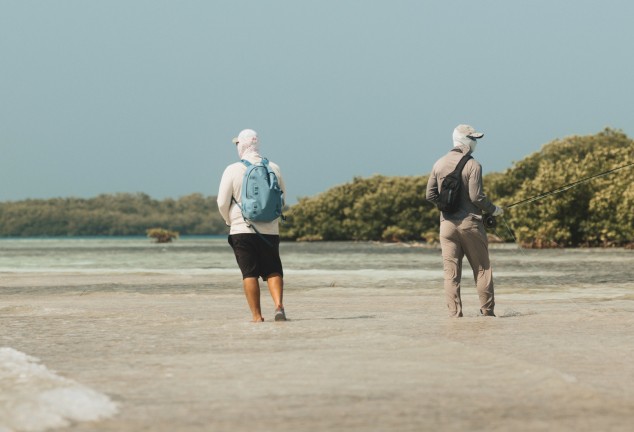
Early morning and evening. Floating line, unweighted fly. Get in quietly, lead the fish by a good distance, and strip steady. Big tarpon on shallow water are spooky. One bad cast and they're gone. Smaller fish give you more room for error.
Rivers and lagoons
Blind casting with an intermediate line. Work the points, the creek mouths, any structure you can find. Rolling fish tell you exactly where to cast. Mornings and evenings produce most, but lagoon fish will eat all day if the mood is right.
Tarpon fly fishing gear
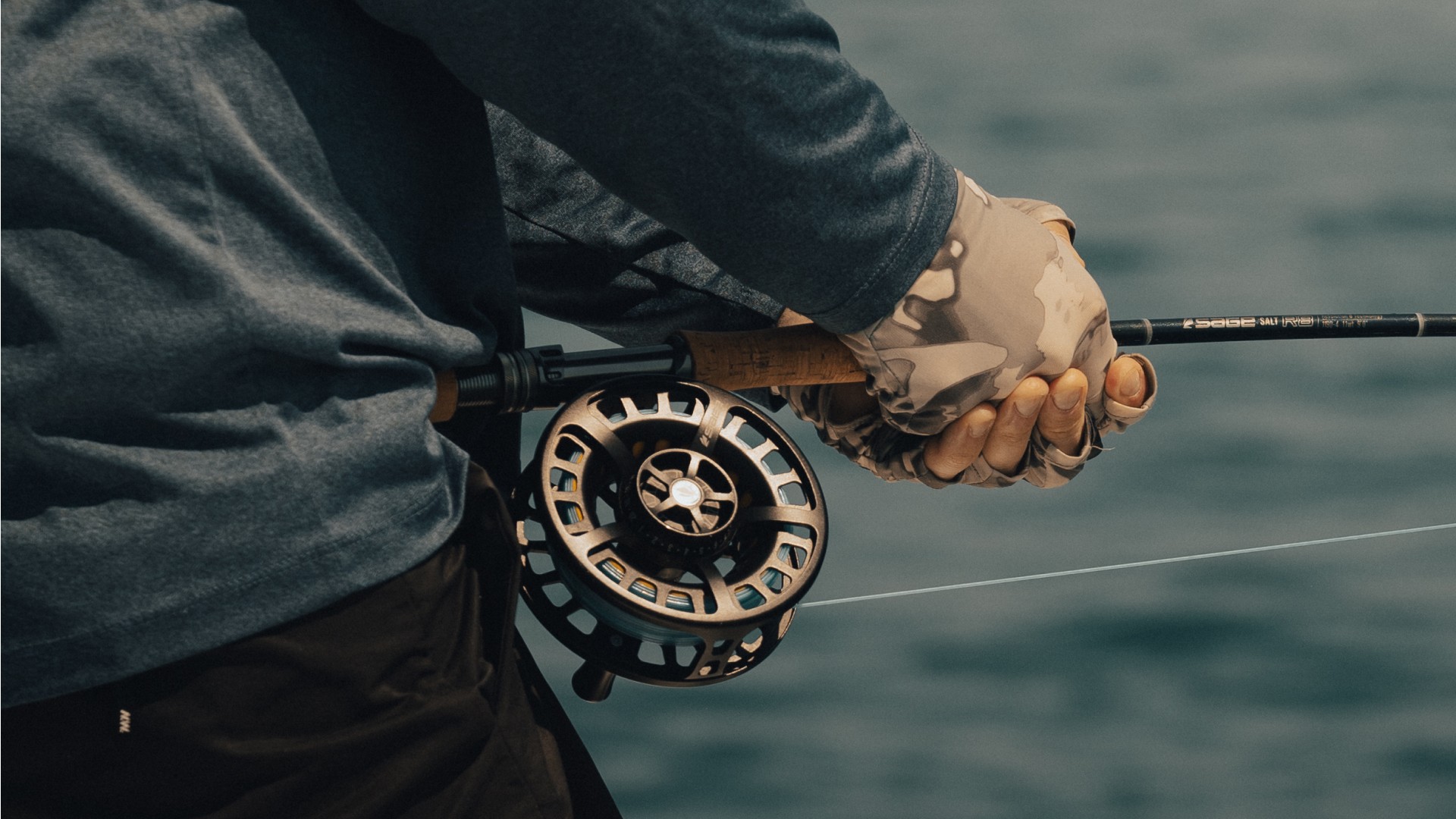
Rod and reel
11 or 12-weight. Don't go lighter for the channel fish. When a big one runs it doesn't stop and you need the backbone to fight them properly. Reel needs at least 350 yards of 30-pound backing. For smaller resident fish a 10-weight will do the job.
Lines
Two setups. Floating line for the flats and lagoon, full-sink or heavy sink-tip for the deep channel.
Leader and tippet
For big migratory fish: 60-pound butt stepping down to 40-pound, then 18 inches of 20-pound class tippet, finished with a 12-inch bite tippet of 50-pound. Tarpon mouths are rough and long fights wear through light material. For resident fish under 40 pounds you can go lighter. 20 to 30-pound class with a 30-pound bite tippet is fine.
Best tarpon flies for Placencia
Black Death, Cockroach, Tarpon Toad, EP Peanut Butter, Tarpon Bunny, Gummy Minnow, EP Minnow. Those are the flies that work down here. Dark days: black and purple, black and red. Clear water: chartreuse and white, orange and grizzly, tan and white.
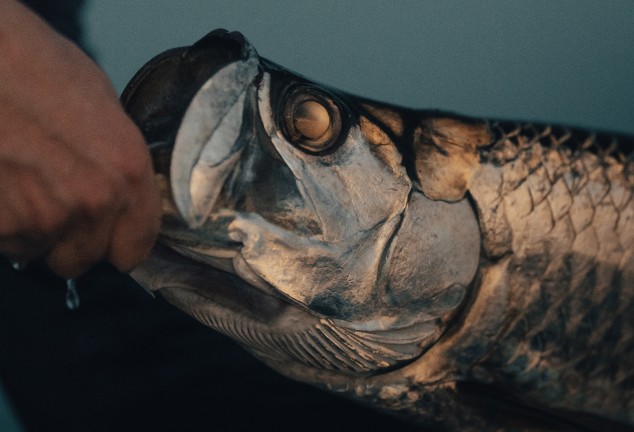
Tarpon eyes are on top of their head. They look up. Keep the fly unweighted or barely weighted so it stays up in the water column where they can see it. Hook sizes 1/0 to 3/0.
Tides and moon phases for tarpon
Tides matter more for tarpon than almost anything else you'll fish for down here.
March through August:
First and last quarter moons. Moderate flows that move baitfish around without flooding the flats.
September through November:
New and full moons push too much water. Flats flood, baitfish scatter. Stick to quarter moons and fish low to half-tide.
December through February:
New and full moon spring tides are your best bet. Tides are smaller overall and the movement concentrates fish.
More on reading tides for fly fishing in Belize on the tides and moon page.
Tarpon conservation in Belize
Belize made catch-and-release mandatory for tarpon, permit, and bonefish in September 2009. Statutory Instruments 114 and 115. Possession is prohibited. You need a sport-fishing licence.
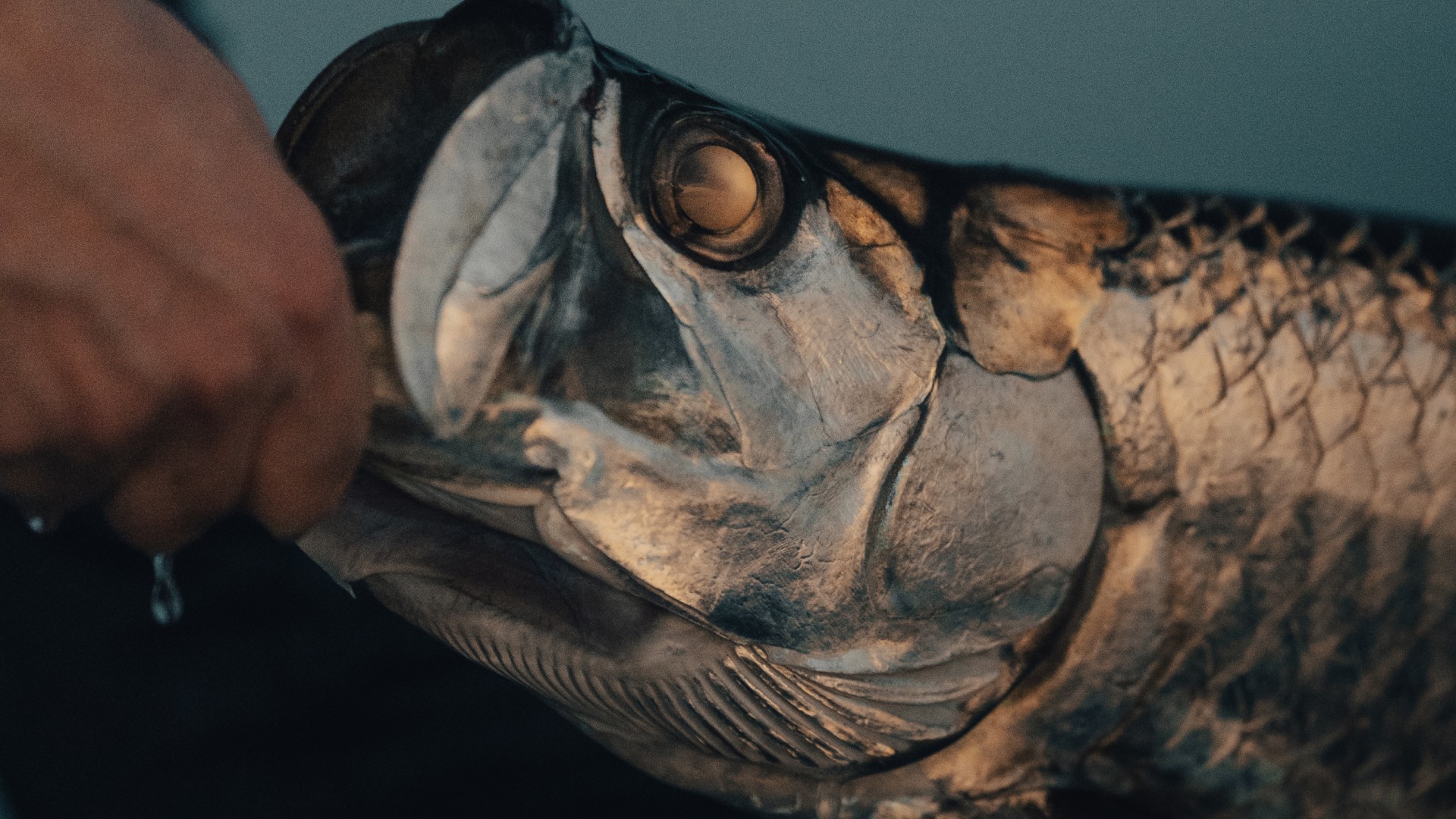
Female tarpon can live beyond 50 years. Oldest confirmed captive fish reached 63 according to the Florida Museum of Natural History. A 2013 Bonefish and Tarpon Trust study put the value of Belize's catch-and-release fishery at around BZ$112 million a year. That number only holds up if the fish are still there.
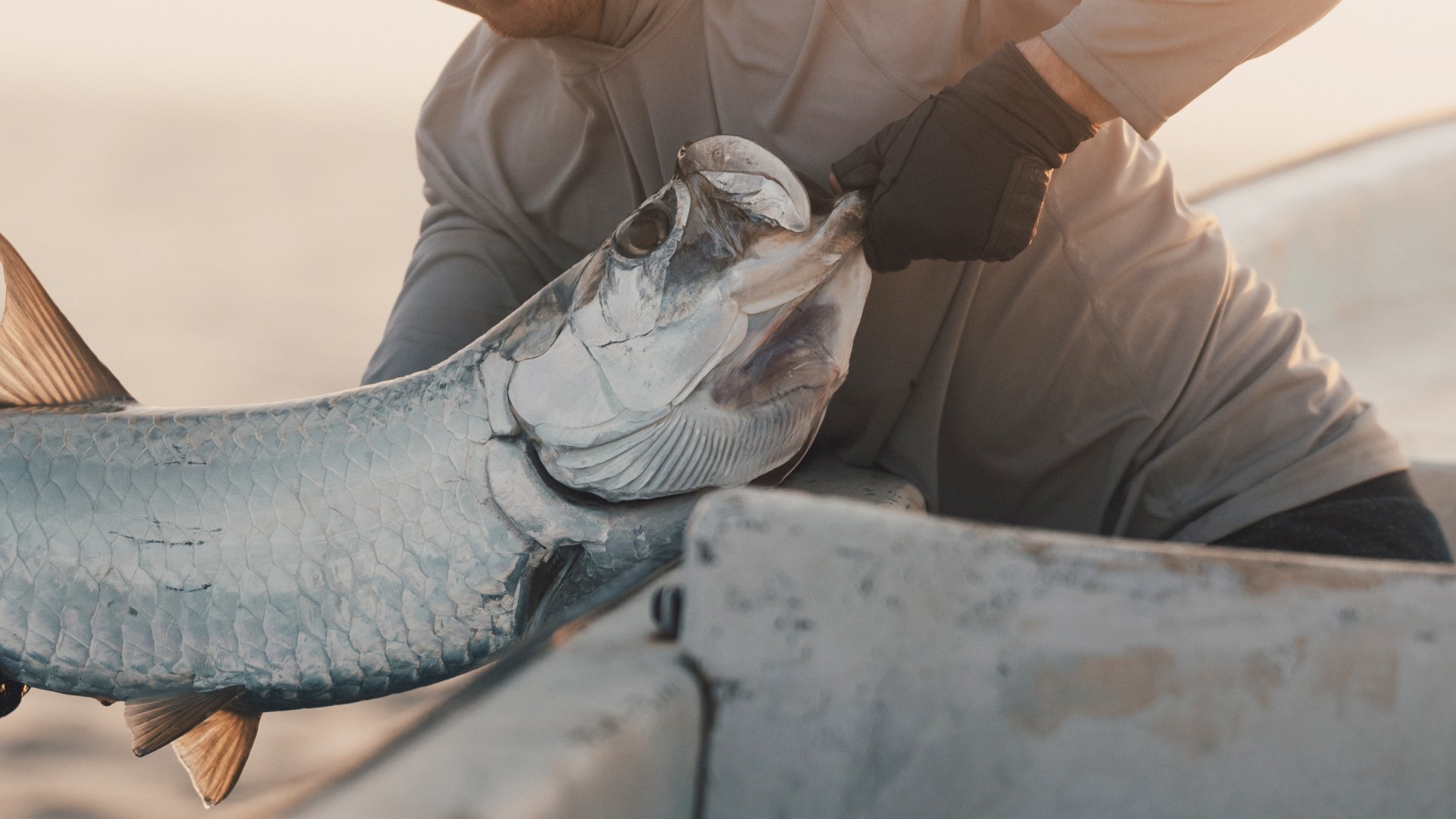
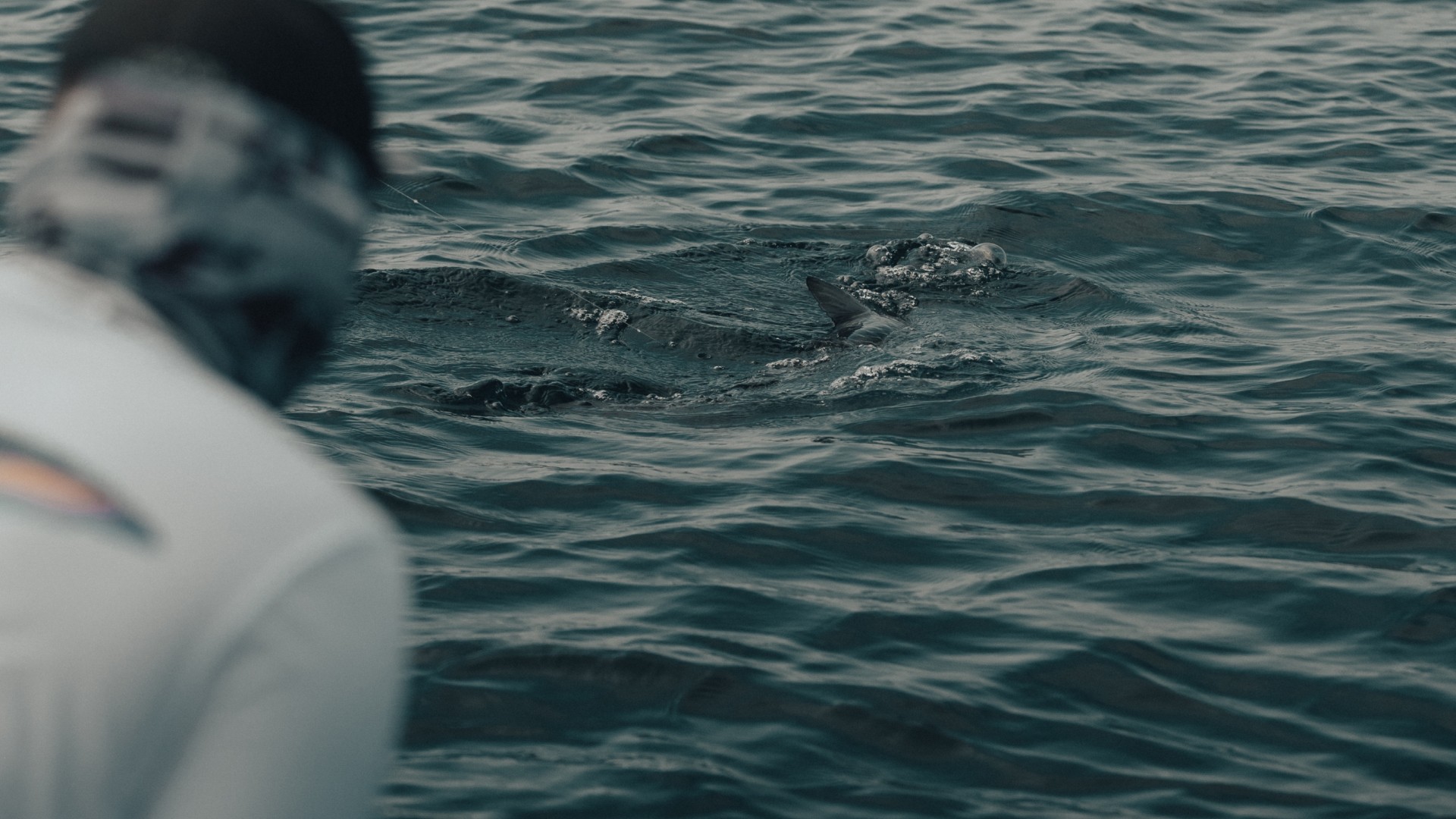
Keep it in the water. Revive it properly before you let it go. The fish you release today is someone else's shot tomorrow.
What to expect on a tarpon trip
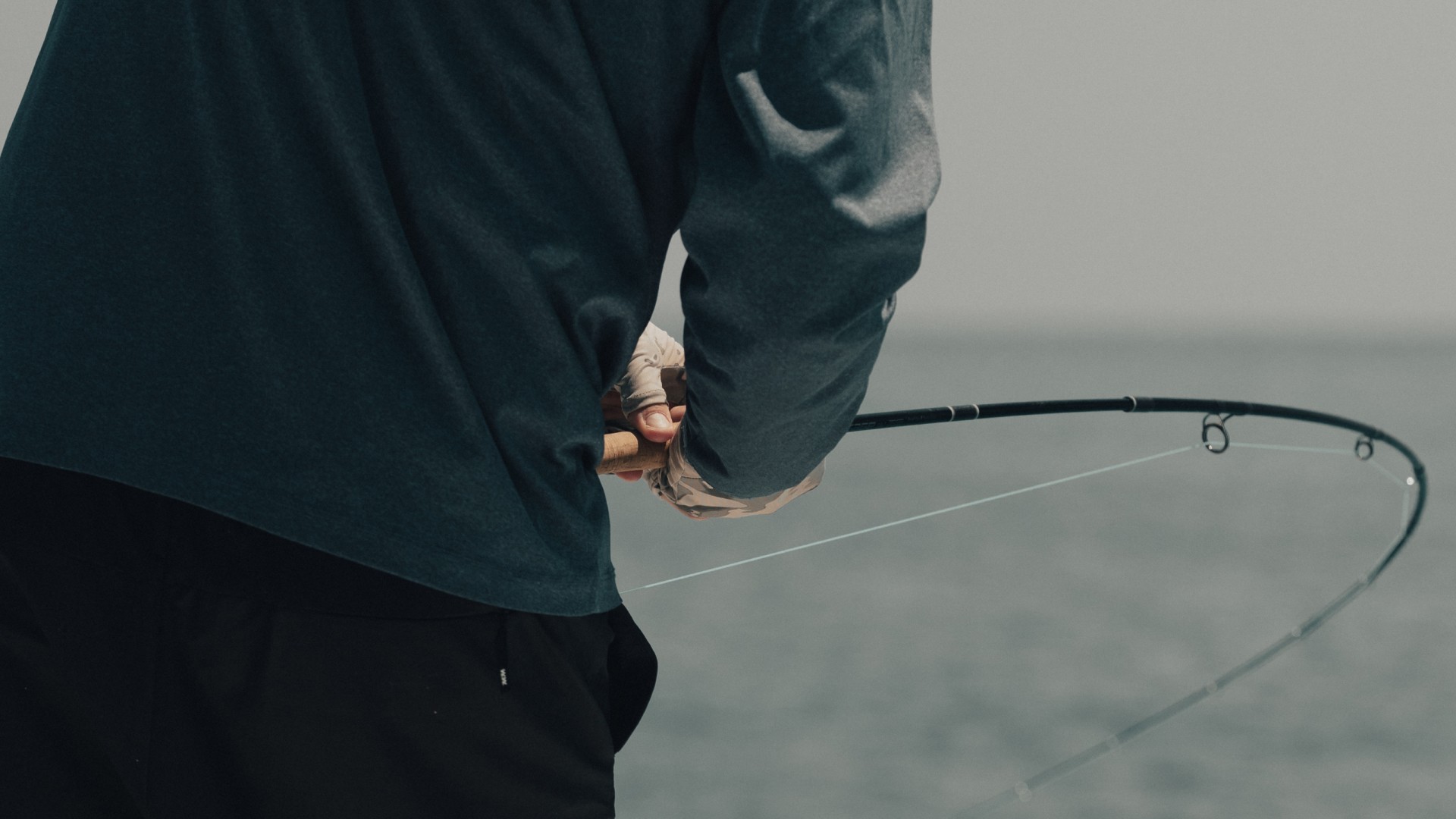
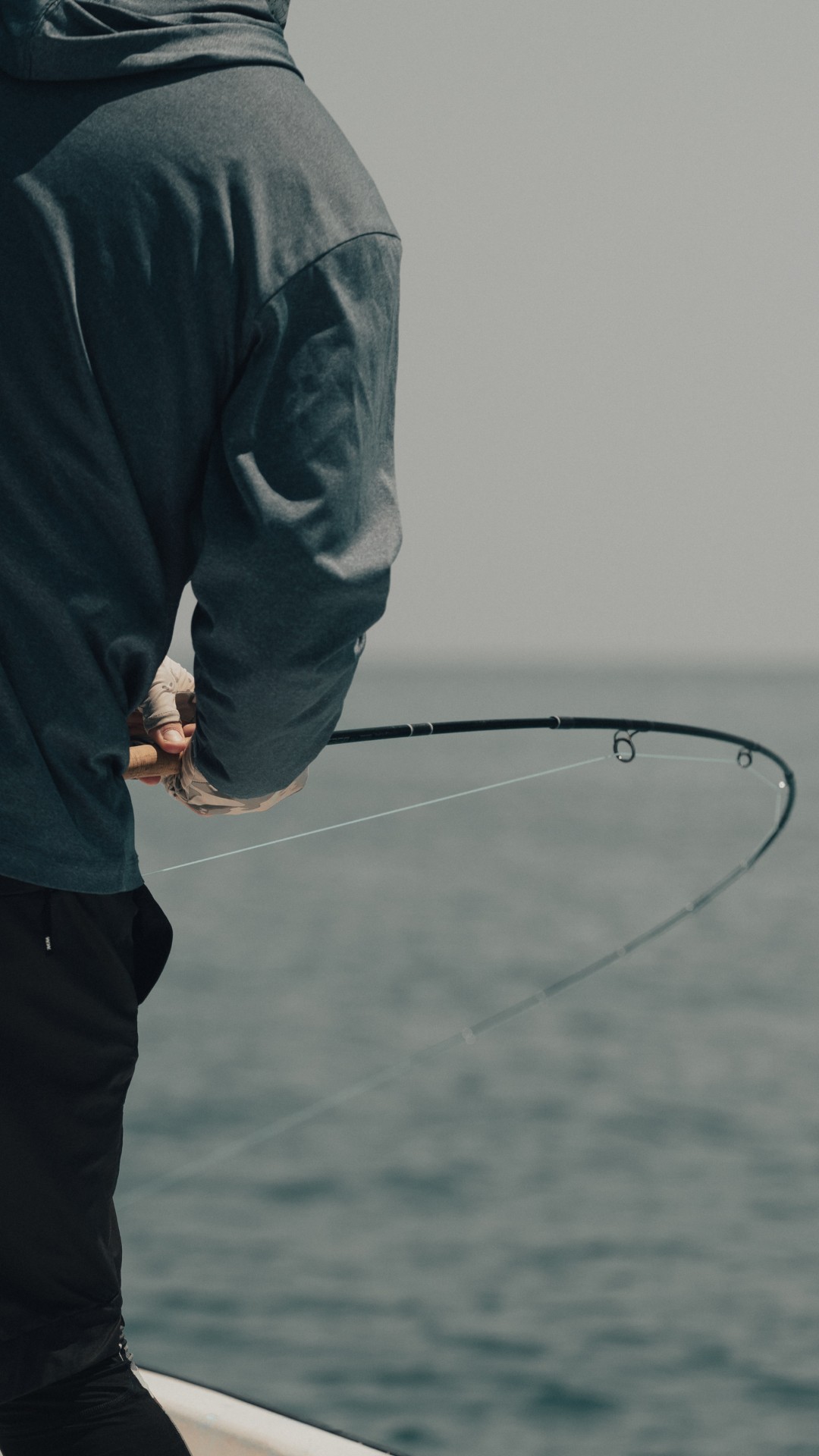
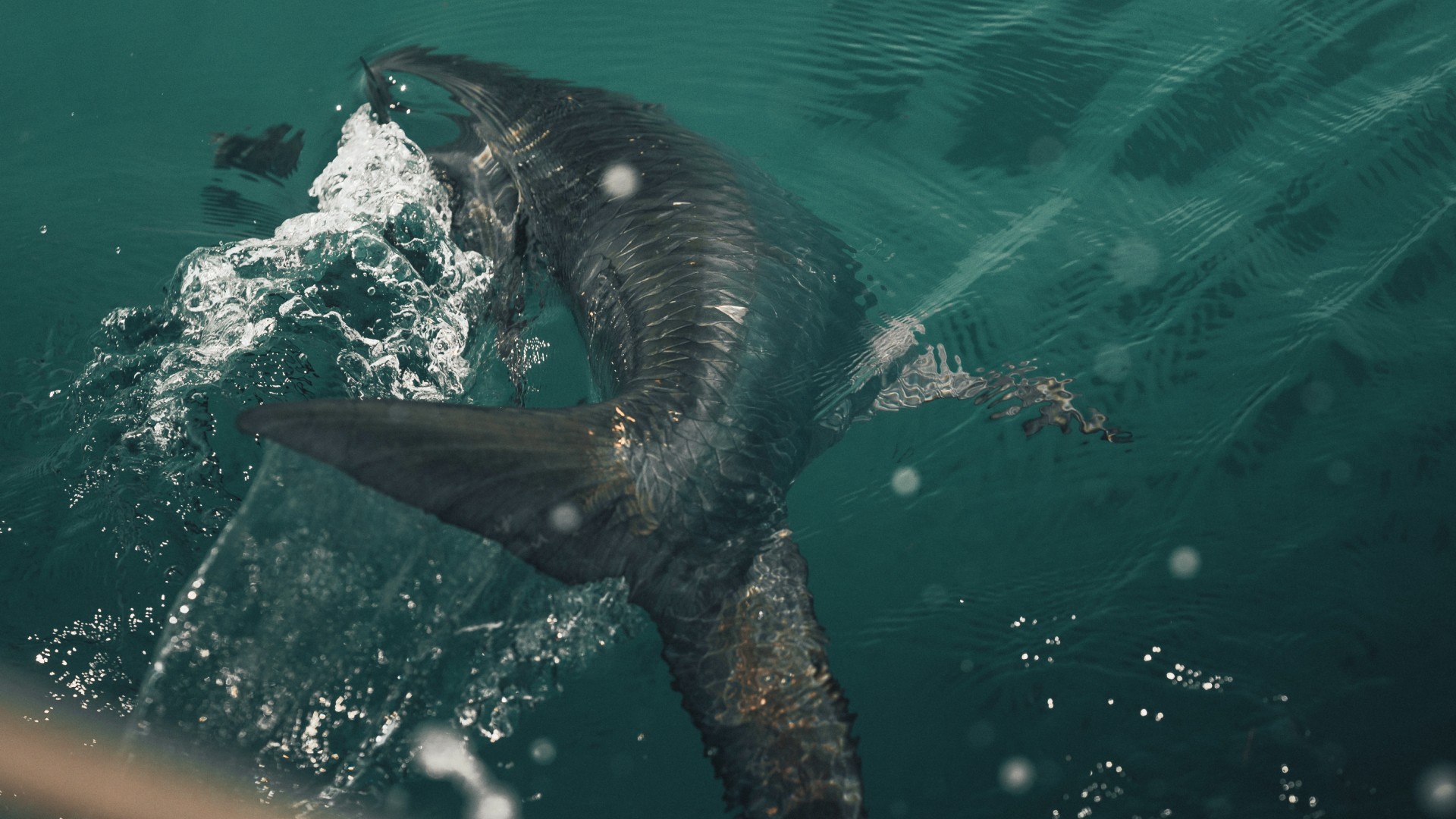
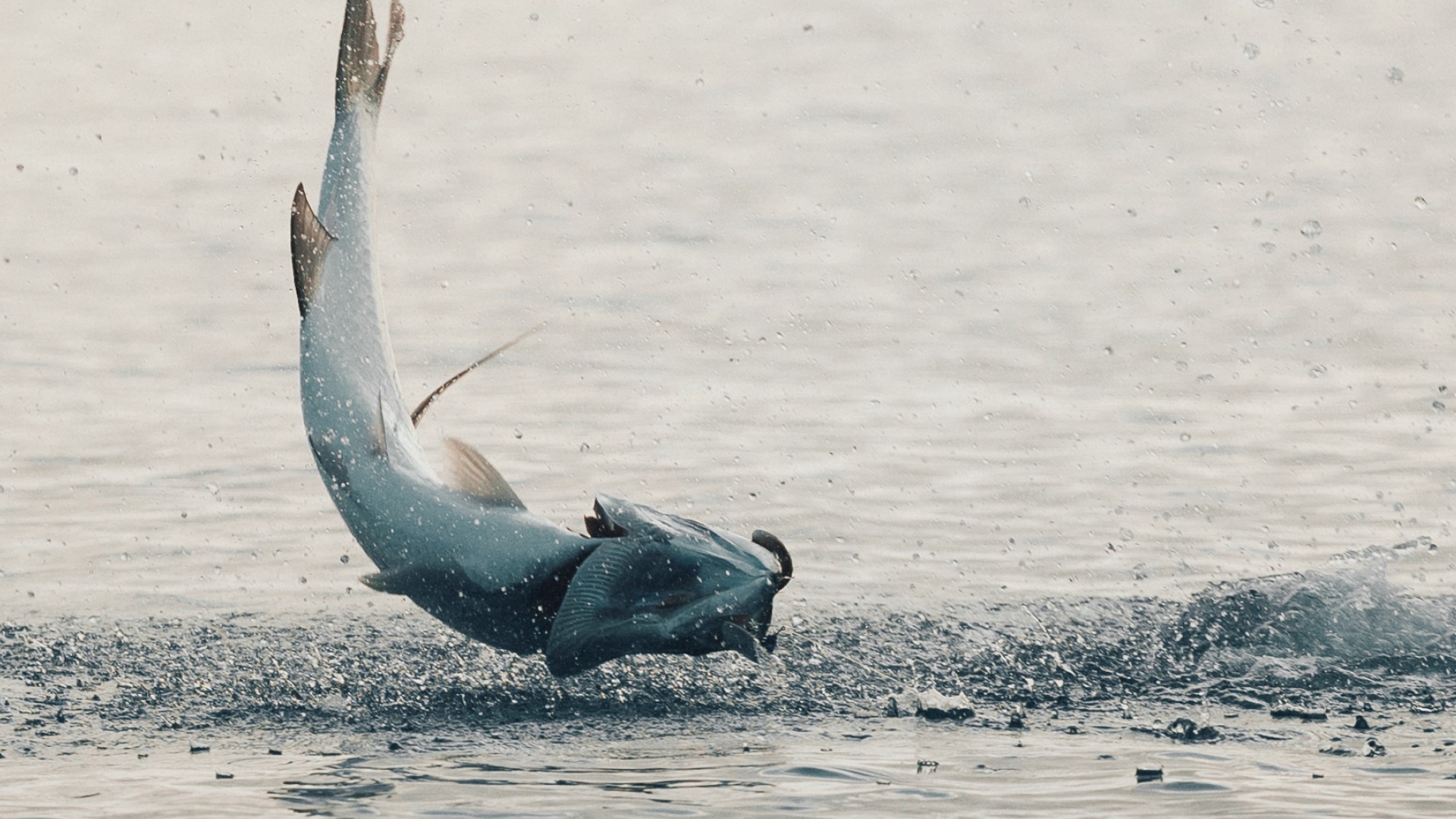
These fish are hard. Strip-strike hard when they eat. The mouth is bony and you need to drive the hook home. When they jump, bow the rod toward them immediately. "Bow to the king." Not optional. On a tight line the hook just pulls out, the mouth is too hard for it to hold.
Long fights. Work the fish steadily, rod butt against your body. Don't try to horse them.
June through August is your best window for migratory fish. Same window for permit and bonefish if you're after a Grand Slam. See the full seasonal guide for more.
I've been putting people on tarpon out here for a long time. If you're thinking about making the trip, reach out. We'll figure out the right time of year for what you're after and go from there.
Feb 13, 2026